

Employee Wellbeing Program Utilization: Why Wearables Drive Sustained Participation
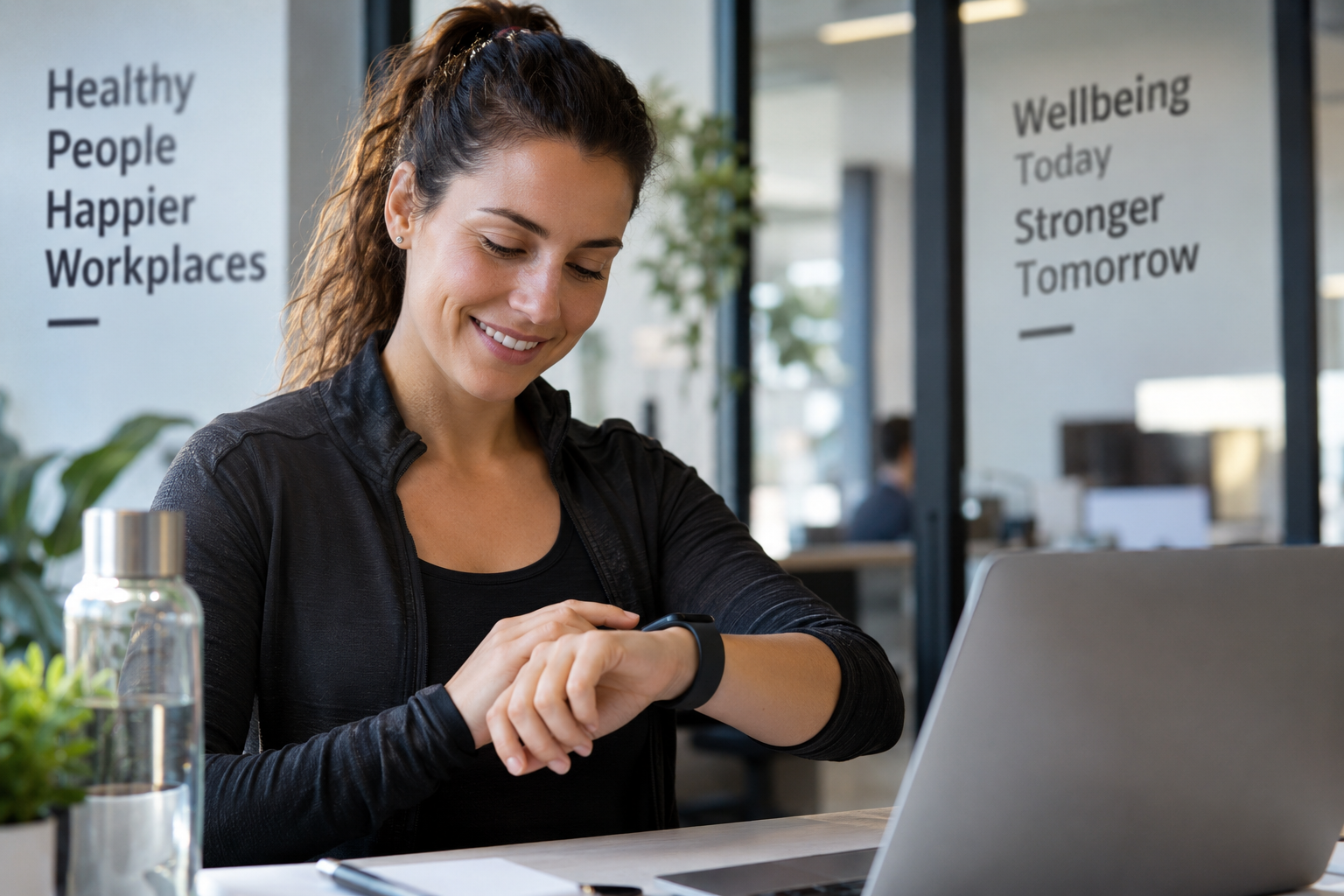
Adoption, active participation and retention measure different things. Why wearables keep people engaged over months: passive data collection, low friction and freedom to use the device they already own.
A good employee wellbeing program is not the one that gets the most sign-ups in the first month. It is the one employees continue to use after 3, 6 and 12 months.
This is where wearable-based wellbeing programs have an important advantage: once the device is being worn, much of the data can be collected automatically during everyday life, without repeatedly asking employees to open an app, complete surveys or manually log what they do.
How do you measure employee wellbeing program utilization?
First, it is important to separate three metrics.
Adoption rate = employees who activate the program / eligible employees.
Active participation rate = employees who continue to use the program / eligible employees.
Retention rate = employees who remain active after a defined period / employees who initially joined.
These are different KPIs.
One program might achieve 70% adoption at launch but have only 15% of employees still active six months later. Another might start at 45% adoption and stabilize at 35% active participation.
When measuring employee wellbeing, the second scenario may be much more valuable.
Why are wearables well suited to continuous participation?
The main advantage is low friction.
A survey has to be completed. An app has to be opened. A session has to be booked. A wearable, by contrast, can automatically collect data throughout the day and, depending on the device, during sleep.
Research distinguishes between “active” data collection, which repeatedly requires an action from the individual, and passive sensing, which can collect information such as activity, sleep and heart rate without repeated user input.
This reduces the effort required from employees and makes it possible to observe trends in real-world conditions.
There is also evidence that wearable use can be sustained when the device is simple and becomes part of a person’s routine. In one six-month study using a wrist-worn wearable, median adherence was 88.2%.
This is not a benchmark for corporate wellbeing programs, but it shows that continuous wearable-based monitoring can be maintained over extended periods.
A more recent longitudinal study involving 239 office and manufacturing workers collected wearable data for nine months and recorded median data-collection adherence of 61.9%. The authors highlighted simplicity, automatic synchronization and the ability to use alternative devices as important factors for supporting long-term participation.
4 advantages of wearables in employee wellbeing programs
Data collection can be passive. Employees do not need to remember to complete something every day.
They fit into everyday routines. Smartwatches, rings and fitness bands can be worn throughout much of the day and, depending on the device, during sleep.
They generate longitudinal data. Instead of taking a snapshot every six months, organizations can observe trends across weeks and months.
They measure behaviors, not just app usage. Steps, activity and other signals available from the device can help build meaningful aggregate trends.
This does not mean that every wearable automatically produces high participation. Ease of use, gamification, comfort, battery life, perceived value and privacy can all strongly influence long-term adherence.
Why let employees use the wearable they already own?
There is another way to reduce friction: do not force everyone to use the same device.
Someone who already wears an Apple Watch, Garmin, Oura, Fitbit, Samsung, Polar or WHOOP has already built the device into their routine.
Instead of replacing that habit, an employee wellbeing program can build on it.
For employees who do not already own a wearable, the company can provide one.
This is the approach used by Vitality+: a device-agnostic employee wellbeing platform that allows employees to connect compatible wearables they already use while also enabling companies to provide a device to those who do not have one.
The objective is simple: reduce the number of actions required to participate and increase continuity of measurement.
From utilization to measurable wellbeing
The value of a wearable is not simply that employees use it.
The real shift is moving from:
“How many employees used the program?”
to:
“Is the wellbeing of the group changing over time?”
With Vitality+, employees can see their own individual data, while the employer works with aggregated indicators across sufficiently large groups.
The HR dashboard can therefore connect:
adoption → participation → retention → wellbeing trends.
This is where a wearable-based wellbeing program becomes different from a traditional employee benefit.
It does not simply measure how many people consumed a service. It makes it possible to assess whether there is an observable change over time.
In summary
Wearables are one of the most interesting approaches for building an employee wellbeing program designed for continuous participation because they can turn measurement into something that happens during everyday life, with fewer manual interactions.
Technology alone, however, is not enough.
A successful program also requires a device employees are willing to wear, freedom of choice, strong privacy principles and a platform capable of turning thousands of individual data points into understandable aggregate trends.
That is the model behind Vitality+: using wearables to move from wellbeing as an employee benefit to measurable wellbeing.
Frequently asked questions
What is a good employee wellbeing program utilization rate? There is no universal percentage. It is more useful to measure adoption, active participation and retention at 90, 180 and 365 days using the same definition consistently over time.
Why can wearables support more continuous participation? Because part of the data can be collected passively while the device is being worn. Other wellbeing initiatives often require an active interaction, while a wearable sensor can continue collecting data without the employee having to repeatedly perform an action.
Do companies need to buy a wearable for every employee? Not necessarily. Vitality+ can integrate compatible personal devices and allow companies to provide a wearable to employees who do not already own one.
What can the employer see? In the Vitality+ model, personal data remains visible to the individual. The company uses dashboards and aggregated trends to understand participation and changes in employee wellbeing without turning the program into an individual employee monitoring tool.