

AI in Corporate Wellbeing: How AI and Wearables Help Employees Understand Their Health Data
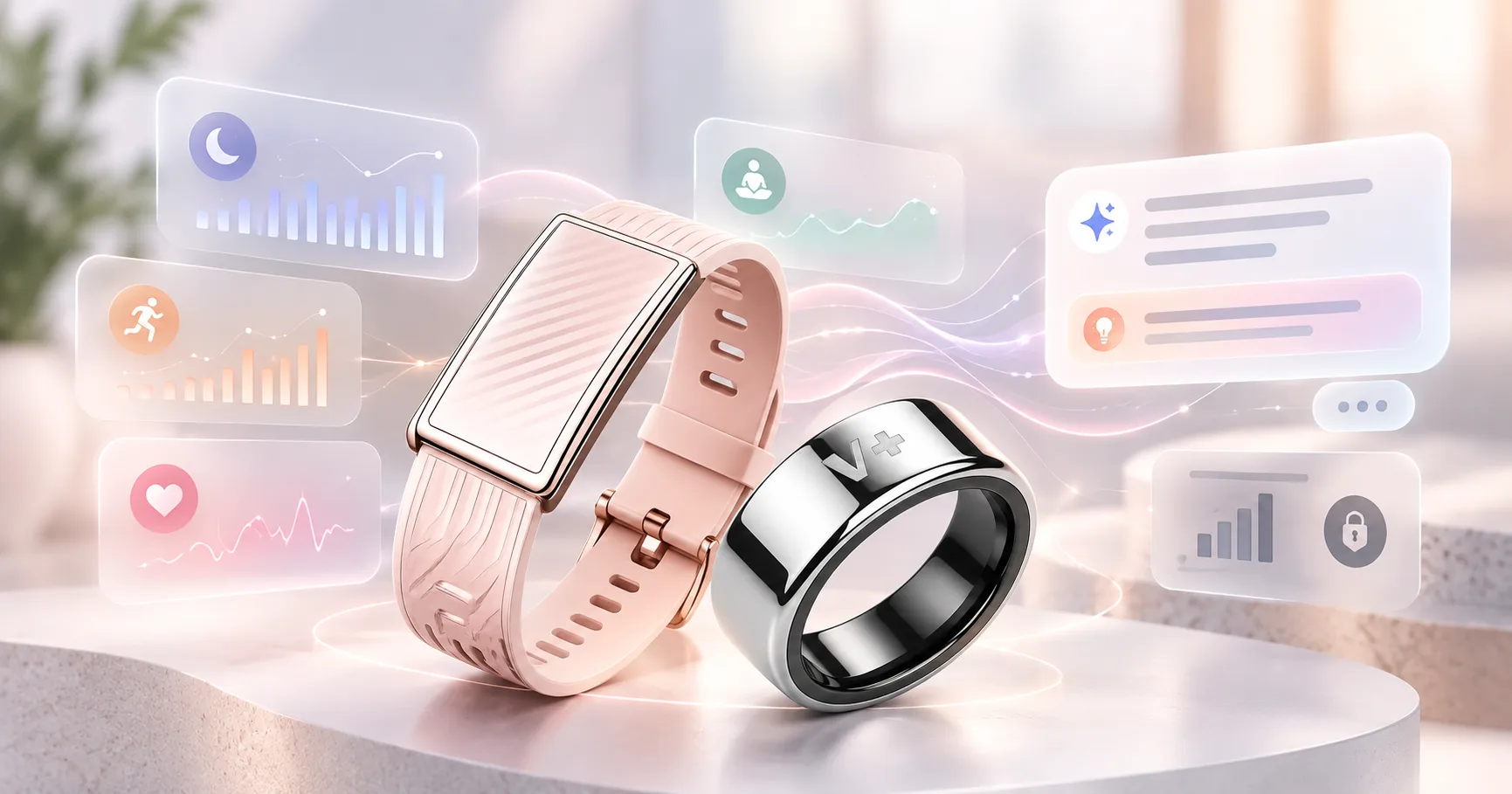
Wearables collect an enormous amount of health data. AI can help turn that data into something more valuable: information employees can actually understand and use.
An Apple Watch, Garmin, Oura, WHOOP or another wearable can track sleep, activity, recovery, stress and heart rate every day.
But collecting data is only useful if people know what it means.
From wearable data to useful answers
Opening a wearable app and seeing a recovery score of 62 or a change in sleep duration tells you what happened. It does not always tell you why it happened or what to pay attention to.
An employee may want to know:
“Why has my recovery been lower this week?”
“How has my sleep changed over the last month?”
“Am I getting enough physical activity?”
This is where AI can make wearable data more accessible.
Instead of navigating through multiple charts and metrics, employees can ask questions about their own data in natural language and receive personalized explanations based on the information available to them.
How AI is changing corporate wellbeing
Traditional corporate wellbeing programs often provide benefits, activities or educational content to an entire workforce.
Combining AI with wearables introduces a more personal layer.
With Vitality+, an employee can connect a compatible wearable and use AI to explore their individual wellbeing data.
For example, if recovery has declined over several days, AI can look at related trends in sleep, activity or stress and help provide context.
If sleep duration has gradually changed over several weeks, the employee can ask about that specific period instead of manually comparing individual days.
Wearables collect the information. AI helps make sense of it.
The purpose is not to provide medical diagnoses or replace healthcare professionals. It is to make everyday wellbeing data easier to interpret and more useful.
From data to better awareness
The real value is not another score or another dashboard.
It is helping people recognize patterns.
An employee might notice that periods of lower sleep consistently coincide with poorer recovery. Another may realize that their activity has gradually decreased over several weeks.
These insights do not make decisions for the individual, but they can provide useful context for making more informed choices about everyday habits.
This changes the role of the wearable: from a device that simply records information to a tool that can help employees better understand their own wellbeing.
AI, employee health data and privacy
Using wearables and AI at work naturally raises another question:
Can HR see an employee's individual health data?
With Vitality+, individual data remains separate from the information available to the company.
Employees can access their personal wearable data and AI-powered insights. HR works with aggregated and anonymized wellbeing information rather than individual sleep, stress, heart rate, recovery or activity data.
Aggregated insights are only displayed for sufficiently large groups, with a minimum threshold of 30 people.
In practice:
Employees → personal data and AI-powered insights
HR → aggregated wellbeing trends and program analytics
The purpose is not to monitor individual employees. It is to give people useful tools for their own wellbeing while allowing organizations to understand broader trends without exposing individual health information.
From employee wellbeing to measurable wellbeing
For companies, distributing wearables is not the end goal.
What matters is understanding whether employees are actually participating and whether the program continues to create value over time.
Vitality+ allows companies to monitor metrics such as adoption, participation and retention alongside aggregated wellbeing trends through employee wellbeing KPIs.
This creates a clear connection between:
wearables → engagement → personal insights → HR analytics → measurable wellbeing
Employees receive information relevant to their own wellbeing. Companies gain a broader view of how the program is being used and how aggregated trends develop over time.
One platform across different wearables
A corporate wellbeing program should not necessarily require every employee to use the same device.
Some employees already use Apple Watch, Garmin, Oura, Fitbit, Samsung, Polar or WHOOP. Those without a compatible wearable can use a Vitality+ Ring or Vitality+ Band.
Bringing different devices into one corporate wellbeing platform reduces friction and makes it easier to run a consistent program across teams and locations.
For organizations operating in Switzerland, Italy and across Europe, the same wellbeing program can therefore support employees using different wearable ecosystems and working in different countries.
In summary
The next step in corporate wellbeing is not simply collecting more health data. It is making existing data more understandable and useful.
Wearables provide continuous information about everyday wellbeing. AI can help employees interpret that information, identify patterns and better understand changes over time.
At the organizational level, aggregated and anonymized analytics give HR a way to evaluate participation and broader wellbeing trends without monitoring individuals.
Combined with wearables, engagement, challenges, rewards and HR analytics, this creates a more complete approach to measurable corporate wellbeing.
Employees use their data to better understand themselves. Companies use aggregated trends to understand whether their wellbeing program is working.
That is the role of AI in Vitality+: turning data into useful context for the individual while helping organizations build a more measurable approach to employee wellbeing.